Three Price Tiers, One Honest Question
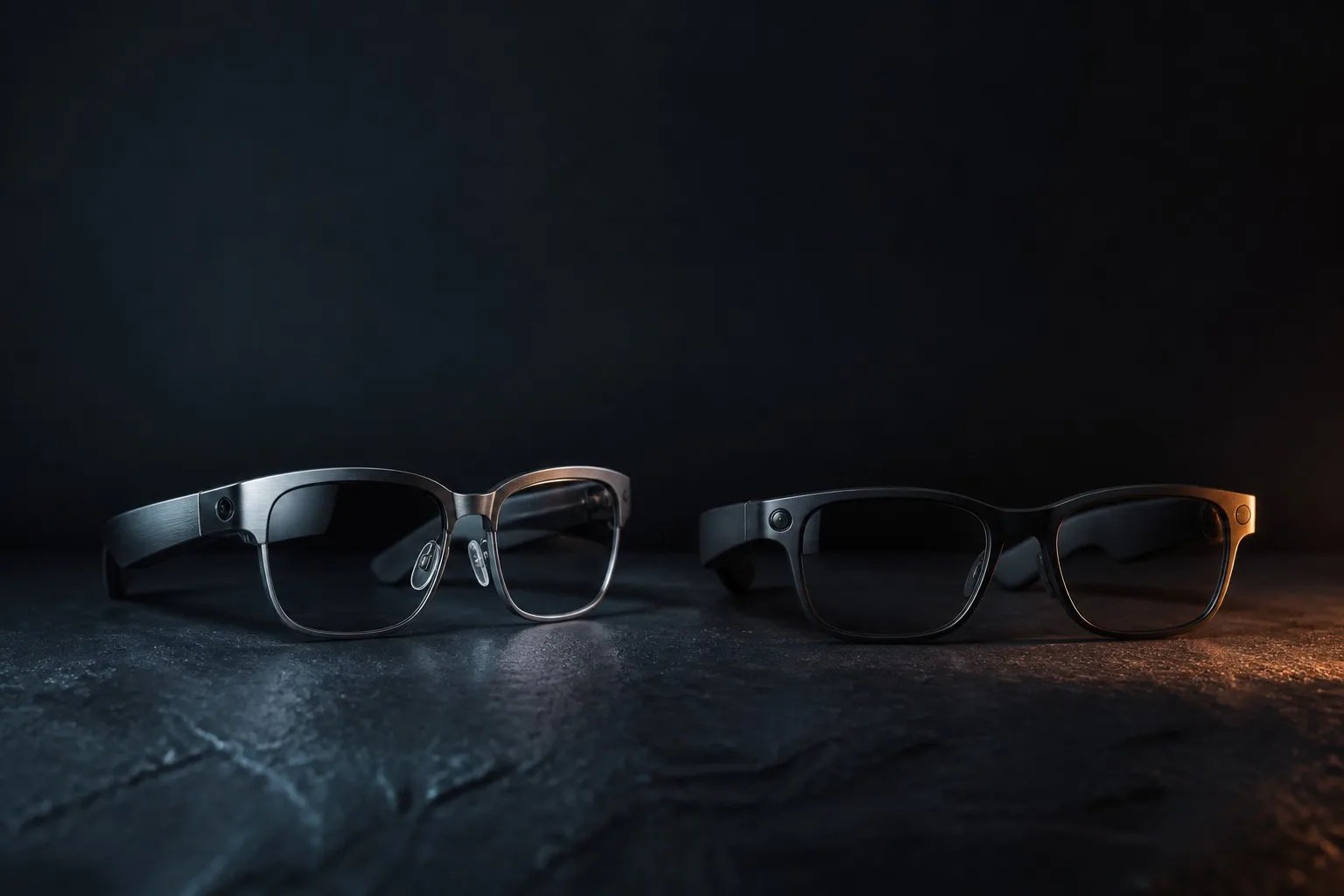
The smart-glasses aisle just stopped being a single product and became a price ladder. On 23 June 2026, Meta and EssilorLuxottica unveiled the Meta Glasses lineup — a 26-style family of AI eyewear stretching from a $299 entry model to a $2,195 display flagship. Same company, same launch day, and a nearly eightfold gap between the cheapest and the most expensive frame. In between sits an entire middle segment that the market can no longer ignore — and that buyers can no longer avoid thinking about.
If that spread leaves you frozen, you are in good company. The question is no longer whether AI glasses are real — the shipment data settled that. The question is which rung of the ladder belongs to you. Buy early and you fear obsolescence. Buy cheap and you fear regret. Buy premium and you fear waste. This article is built to break that paralysis: three price tiers, one honest question, and a framework you can apply in the time it takes to read the rest of this page.
A Category That Refuses to Stay a Niche
The growth numbers are no longer experimental. Smart-glasses shipments rose 139 percent year over year in the second half of 2025, with AI-equipped glasses representing 88 percent of the category and Meta holding more than 80 percent of the market, according to Counterpoint Research. Treeview counts 7.25 million smart glasses shipped across all of 2025 — a volume that would have been dismissed as a fantasy only a few years ago (Treeview).
The June launch turned that momentum into a price architecture. Meta and EssilorLuxottica introduced Meta Glasses in 26 styles spanning colors, lenses, and frames, starting at $299, with the flagship display model at $2,195 — both ends of the range confirmed by Reuters and Meta’s newsroom on 23 June 2026. The competitive lane is widening too: Google has announced plans to return to smart glasses in 2026, and Samsung previewed its own AI glasses at Unpacked. The ladder is real — and it is still being built.
You Are Not Comparing Specs. You Are Managing Fear.
Here is the uncomfortable truth underneath every spec sheet: most buyers are not comparing hardware at all. They are negotiating with three fears at once. The fear of buying too early, so today’s pair feels like a museum piece by next spring. The fear of buying too cheap, so every missing feature whispers from the frame. And the fear of buying too expensive, so a $2,195 bill quietly turns into a $2,195 paperweight once the novelty dissolves.
The crowd only intensifies the pressure. Meta says it has sold 7 million pairs of its glasses — a company-reported figure that has not been independently audited — and researchers expect as many as 100 million people could buy in the coming years, per BBC News. Everyone is moving, which makes standing still feel like losing. But here is the liberating part: the crowd is moving for different reasons. There is no single right answer. There is only the right answer for your life.
Three Price Tiers, One Honest Question
Before any price comparison, answer one question: what will these glasses actually do on an ordinary Tuesday? The honest answer — not the aspirational one — decides your tier. Here is the framework, from the $299 entry point to the $2,195 display flagship.
First-time buyers and the curious; people who want AI help — translations, notifications, voice — without a screen in front of their face; and anyone testing whether smart glasses belong in their life at all.
The display, and everything visual that comes with it. The experience is voice-first and audio-first — quieter, subtler, less spectacular. What you do not give up is money: the downside is capped at $299.
Upgraders from the entry tier who found voice-only limiting; buyers who want better materials, cameras, or fit; and shoppers who already have a specific feature in mind rather than a vague budget.
The clarity of a clean answer. This is where the specs are good enough to tempt and vague enough to confuse — the exact zone where decision paralysis lives. Buy here only when you can name the one feature that justifies the jump. Otherwise, the entry tier or the flagship is the more honest choice.
Professionals and creators who live on visual information — maps, live captions, on-screen translations, photography; early adopters who treat the glasses as a working tool rather than a toy; and buyers for whom $2,195 is an expense, not a splurge.
Money — and a lot of it. Patience, because the display demands charging discipline. And anonymity, because a display pair is conspicuous, and in some venues outright banned.
Battery Is the Silent Dealbreaker
Every tier ultimately runs on the same currency: milliwatts — and the measured numbers deserve your attention before any unboxing video does. In Tom’s Guide testing, the Meta Ray-Ban Display fell to 40 percent battery after just 90 minutes of use. A visually impaired user on AppleVis reported listening to Audible for about three hours as the charge dropped from 98 to 15 percent. With the charging case, total endurance reaches roughly 36 hours — a 50 percent improvement over the previous generation, according to Moor Insights & Strategy.
Read those figures twice. A display that burns most of its charge in 90 minutes of active use is not an all-day companion; it is a tool for focused sessions, with the case doing the work of a second pair. The entry tier, with no display to feed, is the natural stamina option — one more reason the $299 frame keeps looking rational.
You Are Not Buying Glasses. You Are Buying Permission.
No retailer prints the most important spec of all: society is pushing back, and fast. Restaurants, pubs, and theatres across the UK have banned the glasses — the model retailing at £359 — over privacy fears, The Guardian reported on 6 August 2026. Courts in England and Wales now confiscate pairs at the door and return them on the way out, per The Guardian via AOL UK on 12 August 2026. The Electronic Frontier Foundation warns that adding facial recognition to smart glasses would destroy privacy for everyone, not only the people wearing them. And the recording indicator meant to protect bystanders is dim in daylight and easily overlooked, as BBC News notes.
None of this makes the glasses evil. It makes them social objects. Every pair ships with an unwritten behavioral contract: indicator on, recording announced, venue rules respected. The fastest way to make any pair of smart glasses expensive is to ignore that contract — in reputation, in friction, and sometimes in a ban.
“Adding facial recognition to smart glasses would destroy privacy for everyone — not just for the people wearing them.”
Three Rules That Survive Any Price War
Rule one — buy for your Tuesday, not for the trailer. Name the concrete task: reading street signs, translating a menu, captioning a lecture. Let that name pick the tier. If no task survives the test, the entry tier is the rational default — it caps your downside at $299 in a category that will move fast.
Rule two — never pay a middle price for a vague feeling. The in-between segment earns its money only when you can name the feature that pulled you there. If you cannot, you are paying for confusion, and confusion is a terrible product.
Rule three — for the display flagship, wait for the task, not for the discount. A $2,195 pair is justified by the work it will do Monday through Friday, not by the demo it did in the store. And whatever tier you choose: carry the case, respect the indicator, and check the venue before you walk in.
Warnings: The Fine Print Nobody Unboxes
Venue bans are real and spreading. Restaurants, pubs, and theatres across the UK have banned the glasses — the model retailing at £359 — over privacy fears (The Guardian, 6 August 2026). Courts in England and Wales confiscate pairs at the door and return them on the way out (The Guardian via AOL UK, 12 August 2026).
Privacy is the battleground. The EFF warns that facial recognition in smart glasses would destroy privacy for everyone (EFF). Treat every camera as a live camera — including your own.
The indicator is not a guarantee. The recording light is dim in daylight and easily overlooked (BBC News). Announce recording out loud — every time.
Battery math is unforgiving. The display model measured 40 percent remaining after 90 minutes of use (Tom’s Guide via Aircaps). Plan focused sessions, and keep the 36-hour charging case in reach (Moor Insights & Strategy).
Numbers need footnotes. The 7 million pairs sold is Meta’s own, unaudited figure (BBC News). Impressive — but not independent.
A market that splits into tiers is a market that is growing up. Entry for the curious, middle for the specific, flagship for the working professional — each rung has a job, and none of them is a trap when you choose it for the right reason.
Buy for the Tuesday, not the trailer. The right tier is the one you can wear without apologizing — to your wallet, to the restaurant, or to yourself.
Sources & Data
Every figure used in this article, verified against the source. Qualitative mentions of Google and Samsung are directional statements only and carry no price, date, or specification.
| Data Point | Source | Date | Link |
|---|---|---|---|
| Meta Glasses lineup announced with EssilorLuxottica; entry model from $299; display flagship at $2,195 | Reuters | 23 June 2026 | reuters.com |
| Meta Glasses available in 26 styles across colors, lenses, and frames | Meta Newsroom | 23 June 2026 | about.fb.com |
| Smart-glasses shipments +139% YoY in H2 2025; AI glasses 88% of shipments; Meta share above 80% | Counterpoint Research | 26 February 2026 | counterpointresearch.com |
| Full-year 2025 smart-glasses shipments: 7.25 million units | Treeview | 1 August 2026 | treeview.studio |
| Meta Ray-Ban Display battery: 90 minutes of use → 40% remaining | Tom’s Guide via Aircaps | 1 June 2026 | aircaps.com |
| Audible listening of about 3 hours; battery from 98% to 15% | AppleVis | 25 March 2026 | applevis.com |
| Total endurance with charging case ≈36 hours; 50% better than the previous generation | Moor Insights & Strategy | n.d. | moorinsightsstrategy.com |
| 7 million pairs sold (self-reported, unaudited); researchers project up to 100 million buyers; recording indicator dim in daylight | BBC News | 13 May 2026 | bbc.com |
| UK restaurants, pubs, and theatres ban the £359 model over privacy fears | The Guardian | 6 August 2026 | theguardian.com |
| Courts in England and Wales ban the glasses; confiscated at entry, returned on exit | The Guardian via AOL UK | 12 August 2026 | aol.co.uk |
| Facial recognition in smart glasses would destroy privacy for everyone | Electronic Frontier Foundation | 10 March 2026 | eff.org |
All links verified as of 18 August 2026. Display battery figures refer to the display-bearing flagship model; the £359 figure refers to the banned model as reported.
 Independent Intelligence on Ambient Technology
Leave a comment