Robots · Privacy · Buying
A $20,000 Housemate That Someone Else Might Be Driving
SMARTS · 19 August 2026 · 12 min read
Android maker 1X has published a price for the home humanoid. The NEO can be owned outright for $20,000 with a three-year warranty, or leased at $499 a month, with a $200 deposit at pre-order — figures listed on the company’s own order page and echoed by the BotInfo buyer’s guide and the robotics blog RoboZaps. And buried in the same order page, alongside the payment options, is a phrase that deserves a slower reading: the robot’s actions can be remotely supervised. The company’s own materials say NEO is built for full autonomy, powered by Redwood, 1X’s generalist AI model, per 1X. Yet its sales page also references a human being who can watch, and presumably steer, from somewhere else. That is not a scandal. It is the first honest design question of the home-robot era — and it is the question this article is built around: not whether a human is ever in the loop, but whether you can verify when.
The Feeling First
The Honesty Test, Not the Scandal Test
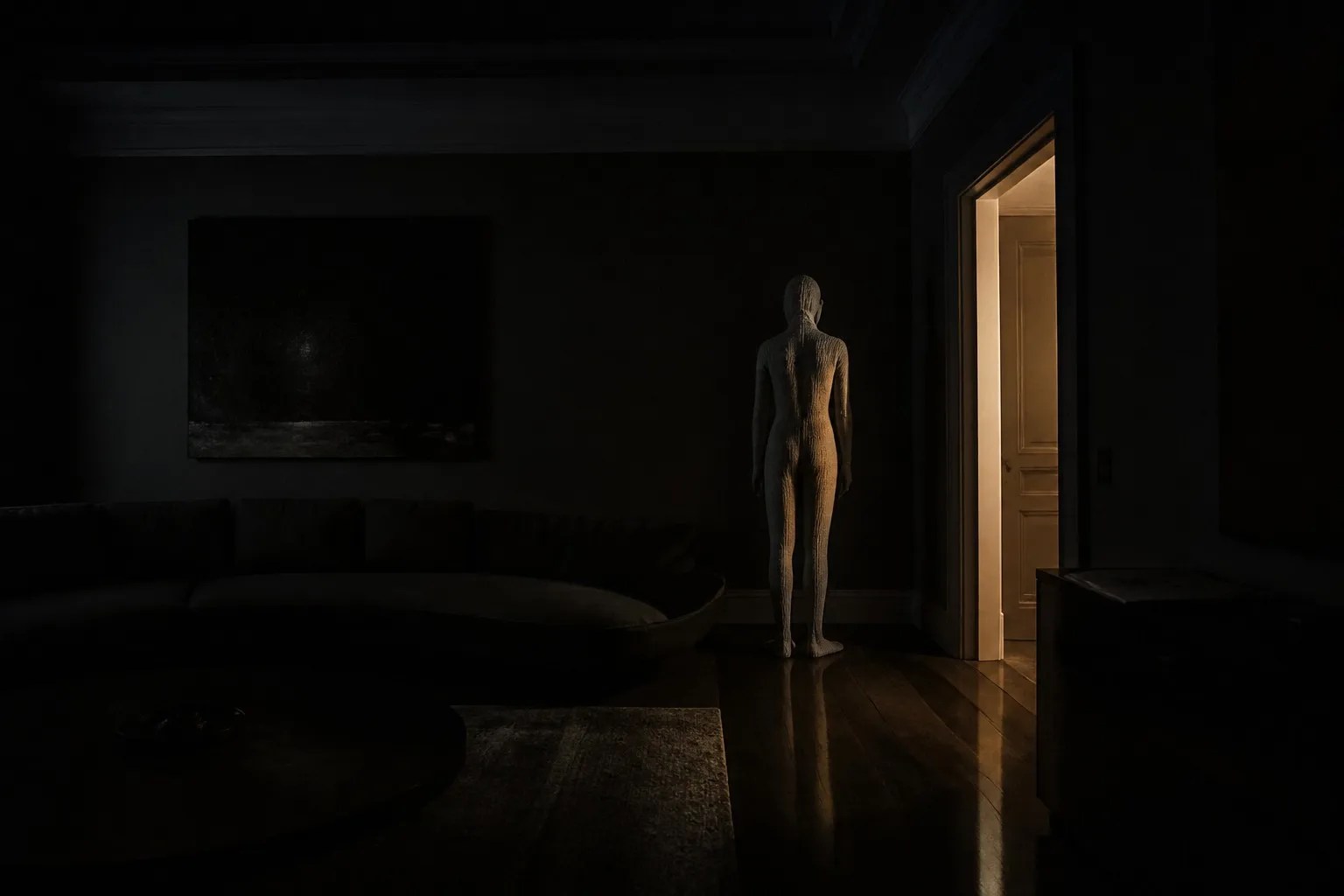
There is a category of domestic object that changes the temperature of a room simply by standing in it, and the fabric-covered humanoid in the corner of the living room is the newest member. It is tall, soft to the eye, and eerily still until it is not. The emotion it produces is not fear of the machine. It is the smaller, sharper uncertainty about the human behind it: when the robot pauses, is the pause a computation, or is it someone somewhere deciding?
The mature way to hold that feeling is to stop treating teleoperation as the scandal and start treating it as the specification. Every serious automation product has a human somewhere in its loop; the difference between a trustworthy one and an untrustworthy one is the honesty of the disclosure. 1X’s position, as reported by CNET, is that owners can restrict NEO from entering or viewing specific areas and that the robot “will never be teleoperated without owner approval.” That is a company claim — CNET is reporting the company’s position, and it is presented here as exactly that. But read it alongside the order page’s own reference to remotely supervising the robot’s actions, and the design tension appears in full: a machine that promises it will not be driven without your approval, sold on a page that mentions remote supervision in the same breath as the payment plan. The honest buyer’s job is not to be scandalised. It is to ask what “approval” means, how it is given, and — most of all — how it can be checked afterwards.
The Market
The Home Humanoid Gets a Price Tag Before It Gets a Track Record
The home humanoid is a category arriving in a particular order: price first, then promise, then — eventually — evidence. 1X has published its numbers: $20,000 to own with a three-year warranty, or $499 a month, with a $200 refundable deposit at pre-order, per the company’s order page. The third-party reporting agrees on the shape of the deal: the BotInfo buyer’s guide describes $20,000 outright or a $499-a-month lease with the $200 deposit, and RoboZaps lists the same published US pricing. These are not three independent data points; the two blogs are reporting the company’s published terms, and they agree with the company’s own page — which is exactly what a buyer should expect from a price list, and no more than that.
What is genuinely new is that the price exists at all. A humanoid for the living room, offered on a public order page, with a warranty and a deposit and a subscription — that is the moment the category stopped being a demo reel and became a transaction. The company says the machine is built for full autonomy and uses Redwood, its generalist AI model, to learn and repeat tasks, per 1X. That sentence is a company claim, and it should be filed under “what the manufacturer says,” not under “what has been demonstrated.” The same discipline applies to everything in this article that describes NEO’s behaviour: the capabilities, the limits, and the safeguards are all company-reported until independent testing says otherwise.
The Pain
What a Buyer Cannot Verify, in Five Questions
The pain points of a $20,000 robot are not the same shape as the pain points of a $500 vacuum. They are verification problems, and they are worth naming one by one.
1. The teleoperation record. The company’s position, per CNET, is that NEO will never be teleoperated without owner approval — yet the order page mentions remote supervision of its actions, per 1X. The buyer’s question is not whether teleoperation exists. It is whether every session leaves a record the owner can audit.
2. The data trail. A robot that navigates your home is a robot that has mapped your home. Where do those maps live, how long are they kept, and who can request them? None of the sources in this article answer those questions, which is precisely why they belong on the buyer’s list.
3. The area restrictions. 1X’s position, as reported by CNET, is that owners can restrict NEO from entering or viewing specific areas. A restriction is only as good as its enforcement, and enforcement is a software claim until it is demonstrated in your house.
4. The subscription’s teeth. A $499-a-month robot that stops being paid for is a question the order page does not answer in the sources reviewed here: does it keep working, does it degrade, or does it stop? That clause matters more than the price.
5. The warranty’s scope. The $20,000 ownership price includes a three-year warranty, per 1X — but a warranty covers a broken part, not a broken promise. What happens to the hardware, the app, and the model when the company’s roadmap changes is not a warranty question; it is an endurance question, and it is the one most buyers forget to ask.
The Numbers
The Price Is Published. The Arithmetic Is Yours.
The published figures are simple: $20,000 to own the NEO with a three-year warranty, or $499 a month, with a $200 refundable deposit at pre-order — per 1X’s order page, the BotInfo buyer’s guide, and RoboZaps. The technology claims are equally simple to state, and they are company claims: NEO is built for full autonomy and runs on Redwood, 1X’s generalist AI model, per 1X. What follows is arithmetic, not reporting: it is our arithmetic, plainly labelled, and it is not a company figure.
A $499 monthly subscription costs $5,988 a year. Over three years — the length of the warranty attached to the $20,000 ownership price — the subscription comes to $17,964, or about $2,036 less than buying. Over four years it comes to $23,952, which is $3,952 more than buying. The crossover sits at roughly forty months: $20,000 divided by $499 is about 40.1, so somewhere in the third year of a lease, the payments have matched the purchase price, and every month after that, the subscription is the more expensive way to have the same robot. None of this is a company claim; it is multiplication. The comparison the company’s own price list invites — ownership versus subscription — resolves differently depending entirely on how long you keep the machine, and that horizon is the only number the buyer actually controls.
OWN
$20,000, once
Three-year warranty included, per 1X. Costs nothing further after the payment — provided the hardware, app and model stay alive on the company’s roadmap.
LEASE
$499 a month
$5,988 a year — our arithmetic, not a company figure. Cheaper than owning for the first ~40 months, per the same arithmetic; more expensive after.
DEPOSIT
$200 at pre-order
Refundable, per the BotInfo buyer’s guide. A reservation, not a purchase — and worth treating exactly that way.
“Teleoperation is not the scandal. It is the specification — and the buyer’s only real power is the right to check.”
The Buy
The Questions to Ask Before the $20,000 or the $499
There is no independent test data, no shipping volume, and no third-party verification of NEO’s behaviour in the sources behind this article — so the buying advice here is a list of questions, because questions are the only instrument a buyer has at this stage of a category.
1. Ask for the teleoperation audit trail. The company’s position, per CNET, is that NEO will never be teleoperated without owner approval, and the order page references remote supervision, per 1X. Ask the seller: what does approval look like, how is it recorded, and can I see the log of every session on my unit, including the ones the company believes I approved? A log you cannot read is a claim you cannot check.
2. Ask about the map and the footage. How long is the home map retained, where is it stored, and who can request it? What happens to recordings of the interior of your house when the subscription ends? The sources here do not answer these questions; that silence is the reason they must be asked in writing, before the deposit.
3. Test the restrictions the first week. Area restrictions are a company claim as reported by CNET. On delivery — not on review day, but in the first week — put the robot in front of a locked door and a taped-off line and watch what it does. The claim is only as real as the boundary it respects.
4. Read the subscription’s end clause before the subscription’s start. The order page’s published terms are the price; what happens if you stop paying is not covered in the sources reviewed here. Get the answer in writing: does the unit keep working, does it degrade, does it stop, and who collects it?
5. Run the arithmetic against your own horizon. Own if you expect to keep the robot beyond roughly forty months; lease if you expect to be the first owner of whatever comes after it. That crossover is our arithmetic — $499 a month against a $20,000 purchase, per the published figures — and it is the cheapest honest advice available in this category.
The Fine Print
Everything Above Is a Company Claim Until It Is Not
1. The capabilities are company-reported. Full autonomy, the Redwood model, the area restrictions, and the never-without-approval promise all come from 1X’s own materials or from CNET’s reporting of the company’s position. None of it is independent verification. No source in this article documents real-world performance, shipping volumes, or third-party test results, and this article asserts none.
2. Pre-order pricing is not delivery. The $200 deposit is refundable, per the BotInfo buyer’s guide, and a deposit at pre-order is a reservation. Delivery timelines, production volumes, and launch dates are not established in the sources reviewed here; treat the price list as a price list.
3. The arithmetic is ours. $5,988 a year, the ~$17,964 three-year total, the ~$23,952 four-year total, and the ~40-month crossover are calculations from the published figures in the sources, labelled as such. They are not company figures, and they assume the subscription price does not change.
4. The corroborating sources are reporting the company’s terms. BotInfo and RoboZaps are third-party guides and blogs repeating published pricing; they are useful as confirmation that the price list exists, and nothing more. Where the company and the coverage disagree — if they ever do — the company’s own page is the document that matters.
The Last Word
A machine that can fold laundry, fetch a glass of water, and stand in the corner of the living room while it thinks is a remarkable thing to price at $20,000. A machine that can also be supervised by a human somewhere else is a remarkable thing to price at anything — and the two facts are not in conflict. They are the same fact, viewed from different rooms. The home humanoid has arrived with a published price, a warranty, a subscription, and an honesty test built into its own sales page: the reference to remote supervision sitting beside the promise of autonomy. The buyer’s answer is not to refuse the technology, and it is not to wave the promise through. It is to demand the audit trail, the retention policy, the termination clause, and the boundary test — and to keep demanding them until the answers exist in writing. The question was never whether a human is in the loop. It is whether you will ever be able to check.
— THE SMARTS DESK
Sources
Research Appendix
Every statistic in this article links to its primary source. Full list, as of 19 August 2026:
| Data point | Institution | Date | Source |
|---|---|---|---|
| NEO built for full autonomy using Redwood, 1X’s generalist AI model (company claim) | 1X (company) | — | Product page |
| $499/mo subscription or $20,000 ownership with 3-year warranty; remote supervision referenced (company claim) | 1X (company) | — | Order page |
| $20,000 outright or $499/month lease; $200 refundable deposit at pre-order | BotInfo (buyer’s guide) | 2026 | Guide |
| Owners can restrict NEO from entering or viewing specific areas; “will never be teleoperated without owner approval” (per the company, as reported) | CNET | 13 Dec 2025 | Report |
| Published US pricing: $20,000 or $499/month with $200 deposit | RoboZaps (blog) | 10 Mar 2026 | Review |
 Independent Intelligence on Ambient Technology
Leave a comment