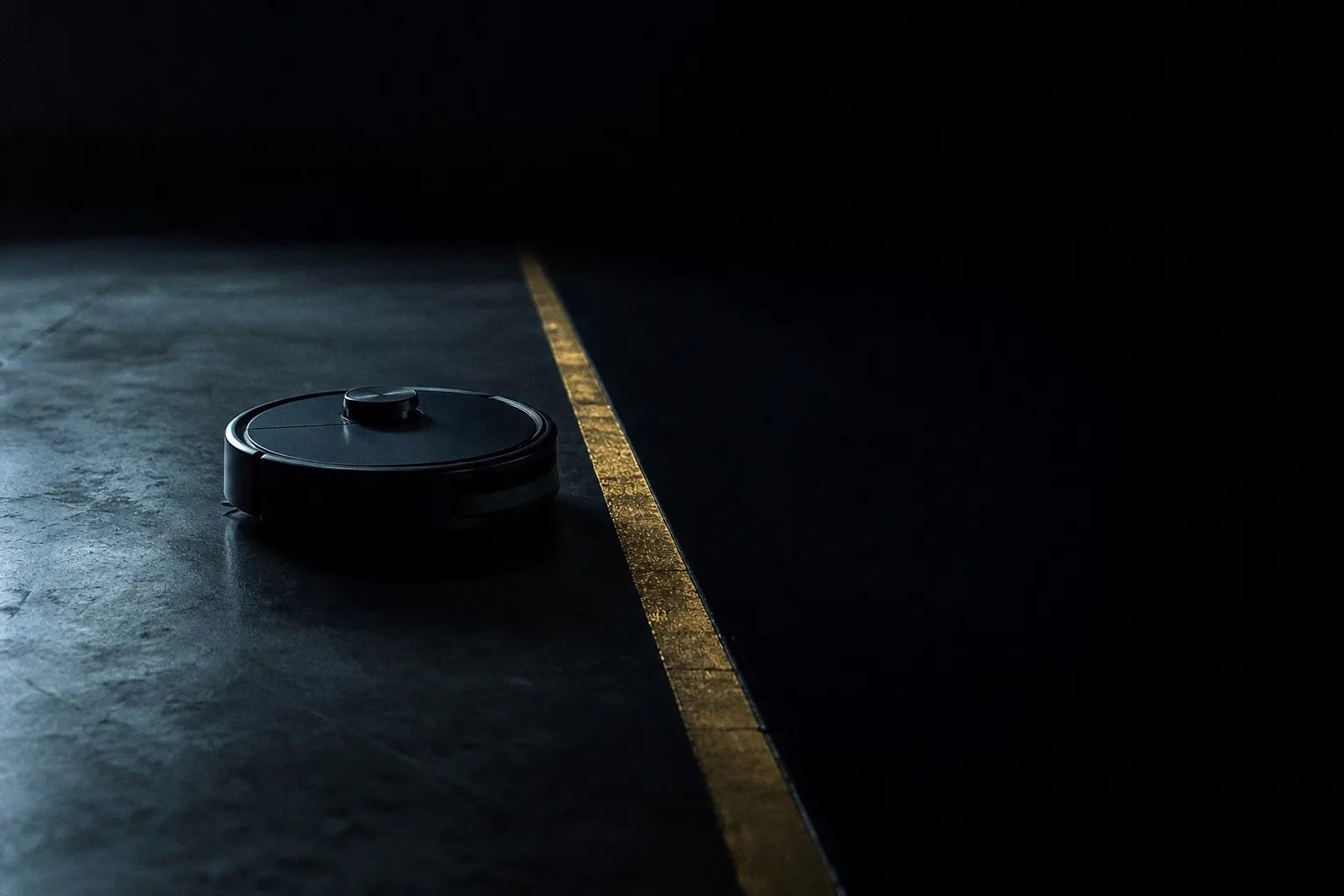
Robots · Regulation · Policy
Washington Just Redrew the Map of Who Can Sell You a Robot
SMARTS · 19 August 2026 · 12 min read
Washington has redrawn the map of who may legally sell you a robot, and the strangest part is how little of the change has to do with you. The Federal Communications Commission has added foreign-made “advanced robotic devices” to its Covered List — the register of equipment barred from receiving any FCC equipment authorization, including via the streamlined Supplier’s Declaration of Conformity, or SDoC, that is in practice the gate to legal sale in the United States. That is the FCC’s own description of its rule, straight from its Covered List FAQ. The rule applies to new devices, not the ones already in your hallway: NBC News reports the ban applies only to new foreign-produced advanced robotic devices, and that existing units are not affected. Yet because so many robot vacuums are made — or built with components made — abroad, the practical reach is wide. Which produces the category’s strangest moment in years: a market with dozens of new models on the shelves this month, and a legal boundary that some of their successors may never cross.
The Feeling First
The Robot in the Hallway Is Fine. The Robot in the Store Is Not.
There is a peculiar intimacy to the robot vacuum. It is the one machine in the house that works while everyone sleeps, that patrols the floors unasked, that lives its small mechanical life in the spaces between furniture. Few devices are more domesticated, and few were less prepared for geopolitics. The FCC’s action does not touch the unit under your sofa. WHAS11, reporting on the rule in late July, was explicit that owners need not worry about an existing device, and NBC News says the same. But the emotional jolt is not about your machine. It is about the category: the realisation that the thing cleaning your floors belongs to a supply chain that Washington can now redraw with a register entry.
The feeling is the small chill of a boundary appearing where there was none. One week, the shelves are full of new vacuums — CNET tested 47 new models this month alone, for pickup power, navigation and obstacle avoidance. The next, a legal line has been drawn through the middle of the category, and nobody can tell you with certainty which side of it next year’s models will fall on. That is not fear of the machine. It is the stranger feeling of watching a household appliance become a matter of state.
The Market
The Covered List, the SDoC, and the Gate to the Shelf
The mechanics matter, so let the FCC speak first. Its Covered List FAQ states that all covered equipment is prohibited from receiving any FCC equipment authorization, including via the streamlined SDoC process. The official Covered List page announces that the FCC “adds foreign-produced power inverters and robots” to the list. The practical reading, offered by the Foundation for American Innovation in its analysis of the action, is that adding foreign-produced, network-connected mobile robots to the Covered List effectively bans their commercial sale in the United States. That last sentence is the think tank’s analysis, not the FCC’s wording — the agency’s own language is the narrower, technical one about equipment authorization. Both belong in the record, and the difference between them is the difference between a legal description and a market forecast.
Why the SDoC matters so much: most consumer electronics never pass through a lab inspection on their way to market. They are authorized through the streamlined self-declaration route, and once that route is closed to a device, the legal path to the US shelf closes with it. Because so many robot vacuums are made, or built with components made, abroad, the practical reach of the rule is wide, as NBC News reports. The same coverage, it should be noted, names specific products — the familiar domestic robot cleaners — and that naming is NBC’s, not the FCC’s. No FCC source cited in this article names a brand as banned, and none should be implied.
The market context is a category in full stride and in mid-air at the same time. This month CNET put 47 new robot vacuums through pickup, navigation and obstacle-avoidance testing — evidence of a category still producing at volume. And the global momentum continues outside the United States entirely: the Korea Herald reported on 21 August that Dreame has set out a Korea expansion plan and launched a new robot vacuum there, an example of the category’s growth proceeding on its own map. The American market may be about to thin out in one corner while the category thickens everywhere else.
The Pain
Three Pains the Rule Creates for the Person With the Credit Card
1. The scope is genuinely unclear to a buyer. The rule’s language is technical — “advanced robotic devices,” equipment authorization, SDoC — and its boundary is doing real work: new devices are affected, existing ones are not, per NBC News and WHAS11. Which new models fall inside that boundary, and which slip outside it, is a question a shopper cannot answer from the box on the shelf.
2. The supply chain is opaque. NBC’s reporting makes the honest point: so many vacuums are made abroad, or built with components made abroad, that the rule’s reach is wide, per NBC News. The consumer rarely knows where the motor, the lidar, or the board came from — which means the consumer rarely knows which side of the line a given model sits on.
3. The real risk is after the sale. A robot vacuum is not a lamp. It needs spare parts, firmware, an app, and a cloud that keeps working. The FTC’s audit of connected products found that of 184 product pages examined, only 21 — 11.4 percent — disclosed how long software support would last, per the FTC’s own report. If a brand’s new US sales are cut off by a regulatory boundary, the incentives to maintain the app and the spare-parts pipeline for the models already sold are not guaranteed by any law — and they were rarely documented even before this rule existed.
The Numbers
Forty-Seven Models, One Boundary, and the Price Context Nobody Should Ignore
Start with the category’s own arithmetic. CNET tested 47 new robot vacuums in August 2026 — pickup power, navigation, obstacle avoidance — a testing load that only makes sense in a category still shipping relentlessly. Then add the pricing context that was already in the room before the FCC acted: consumer technology importers paid $23.5 billion in tariffs in 2025, against $4.0 billion the prior year, per the Consumer Technology Association’s tariff impact snapshot. That figure describes what importers paid, not what the FCC rule will do to shelf prices; no source in this article predicts a price movement from the Covered List action, and neither will this one.
The timeline of the boundary itself: the rule entered public view through local and national reporting in late July and mid-August — WHAS11 on 30 July, NBC News on 11 August — with the Foundation for American Innovation publishing its “effectively banning commercial sale” analysis around the same stretch. And the category’s other map kept moving on 21 August, when the Korea Herald reported Dreame’s Korea expansion plan and a new vacuum launch there. The same week that American shelves confronted a legal boundary, a major maker announced growth in a market with no such line.
The most important number in the whole story is the one that separates the affected from the unaffected: the rule applies to new devices; the ones already in homes are not affected, per NBC News and WHAS11. Every panic purchase, every resale-market spike, every urgent upgrade in the past month has been built on ignoring that single sentence.
The Owners’ Map
Where You Stand, by Category
01
You already own one
Nothing urgent. The rule targets new devices; existing units in homes are not affected, per NBC News and WHAS11. Your machine’s legality was never in question.
02
You are buying now
Prefer models already in the US market over pre-orders and newly announced units. The rule speaks to new devices, so the newest, least-shipped models are the ones whose status is least settled.
03
You are waiting
Reasonable, and cheap. The category continues elsewhere — Dreame’s Korea expansion, per the Korea Herald, shows the map beyond the US still growing. Clarity may arrive with the FCC’s own clarifications.
“The robot that cleans your floor was never just a vacuum. It was a piece of the supply chain — and Washington just moved the line.”
The Buy
How to Buy a Robot Vacuum in the Month the Map Moved
1. If you own one, do nothing. Existing devices are not affected, per NBC News and WHAS11. No urgency, no panic upgrade, no resale theatrics. The rule did not knock on your hallway door.
2. If you are buying, buy the model with the documentation. In a category whose authorization path just narrowed, the brand that can show you the paperwork — the FCC authorization for the specific model, not a generic claim — is the brand that has thought about this. The FCC’s own FAQ describes the prohibition in equipment-authorization terms, per the FCC, and that is the language you should expect a seller to be able to speak.
3. Treat spare parts and app support as the real purchase. A vacuum that cannot get a brush roll or a firmware update is a vacuum that dies young. The FTC’s audit found only 21 of 184 connected-product pages — 11.4 percent — disclosed software-support duration, per the FTC’s report. Ask the brand directly how long parts and updates are promised for this model, in writing. If the answer is a shrug, the regulatory boundary is not the risk you are taking.
4. Read the brand’s US position like a label. Does the brand maintain US distribution, US support, and documented authorizations for the models it sells here? Has it said anything at all about the Covered List? The brands that went quiet in August are telling you something about their roadmap; the ones that can point to their authorizations are telling you the opposite. Neither claim is in this article’s sources — but the question is now part of the category’s due diligence.
The Fine Print
What the Coverage Does Not Always Say
1. The rule is narrower than its headlines. The FCC’s own language prohibits covered equipment from receiving any FCC equipment authorization, including via streamlined SDoC, per the FCC’s FAQ. The “effectively banning commercial sale” framing is the Foundation for American Innovation’s analysis, not agency text. Describe the action as the agency does, and let the analysis carry its own byline.
2. Brand names come from coverage, not the agency. No FCC source cited here names a specific brand as banned. Where secondary coverage names products — NBC’s reporting references the familiar domestic robot cleaners, per NBC News — the naming belongs to that outlet, and readers should treat it as journalism about the rule, not as the rule itself.
3. Regulatory scope can be clarified or amended. Covered List entries and their FAQs are living instruments, and the FCC has already published explanatory material alongside the list, per the FCC. What “advanced robotic devices” means in practice, for which devices, and with what carve-outs, can shift as the agency answers questions. A buyer in August 2026 is buying at the beginning of that process, not at its end.
4. This is a US rule, and prices are a separate question. The Covered List governs US equipment authorization; markets elsewhere are untouched, as Dreame’s Korea expansion illustrates, per the Korea Herald. And on pricing: the $23.5 billion tariff figure from the CTA describes what importers paid in 2025 — it is not a forecast of what this rule does to shelf prices, and nobody in this article’s sources offers one.
The Last Word
The robot in your hallway is fine. The map under the next one is not the map it was a month ago. Washington has drawn a line through the middle of a category that most people never thought of as political, and the honest response is neither panic nor dismissal. It is the realisation that a vacuum cleaner, like every connected object, is a piece of a supply chain — and that supply chains now carry legal boundaries the way they once carried shipping labels. For the buyer, the lesson is quietly practical: the machine that sweeps your floors has joined the list of purchases where the documentation matters as much as the motor. Ask for the authorization. Ask how long the parts and the app will live. And remember that the only sentence in this story that applies to the device already under your sofa is the one that says it is not affected. Everything else is about the ones that have not been made yet.
— THE SMARTS DESK
Sources
Research Appendix
Every statistic in this article links to its primary source. Full list, as of 19 August 2026:
| Data point | Institution | Date | Source |
|---|---|---|---|
| Covered List updated to include foreign-made “advanced robotic devices”; all covered equipment prohibited from receiving any FCC equipment authorization, including via streamlined SDoC | FCC (official FAQ) | — | FAQ |
| “FCC Adds Foreign-Produced Power Inverters and Robots to Covered List” | FCC | — | Covered List |
| Ban applies only to new foreign-produced advanced robotic devices; existing units not affected; practical reach wide because so many vacuums are made or built with components made abroad | NBC News | 11 Aug 2026 | Report |
| New FCC rule bans foreign-made robot devices including robot cleaners; no need to worry about an existing device | WHAS11 | 30 Jul 2026 | Report |
| Analysis: adding foreign-produced network-connected mobile robots to the Covered List effectively bans their commercial sale in the US | Foundation for American Innovation | — | Analysis |
| Dreame Korea expansion plan and new robot vacuum launch — category momentum outside the US | Korea Herald | 21 Aug 2026 | Article |
| 47 new robot vacuums tested for pickup power, navigation, obstacle avoidance | CNET | 4 Aug 2026 | Testing roundup |
| Consumer tech importers paid $23.5B in tariffs in 2025 vs $4.0B prior year | Consumer Technology Association | May 2026 | Snapshot |
| FTC audit: only 21 of 184 connected-product pages (11.4%) disclosed software-support duration | Federal Trade Commission | — | Report |
 Independent Intelligence on Ambient Technology
Leave a comment