Sleep · Audio · Hearing Health
The Earbuds That Buy Silence by Borrowing Your Ears for Eight Hours
SMARTS · 31 August 2026 · 12 min read
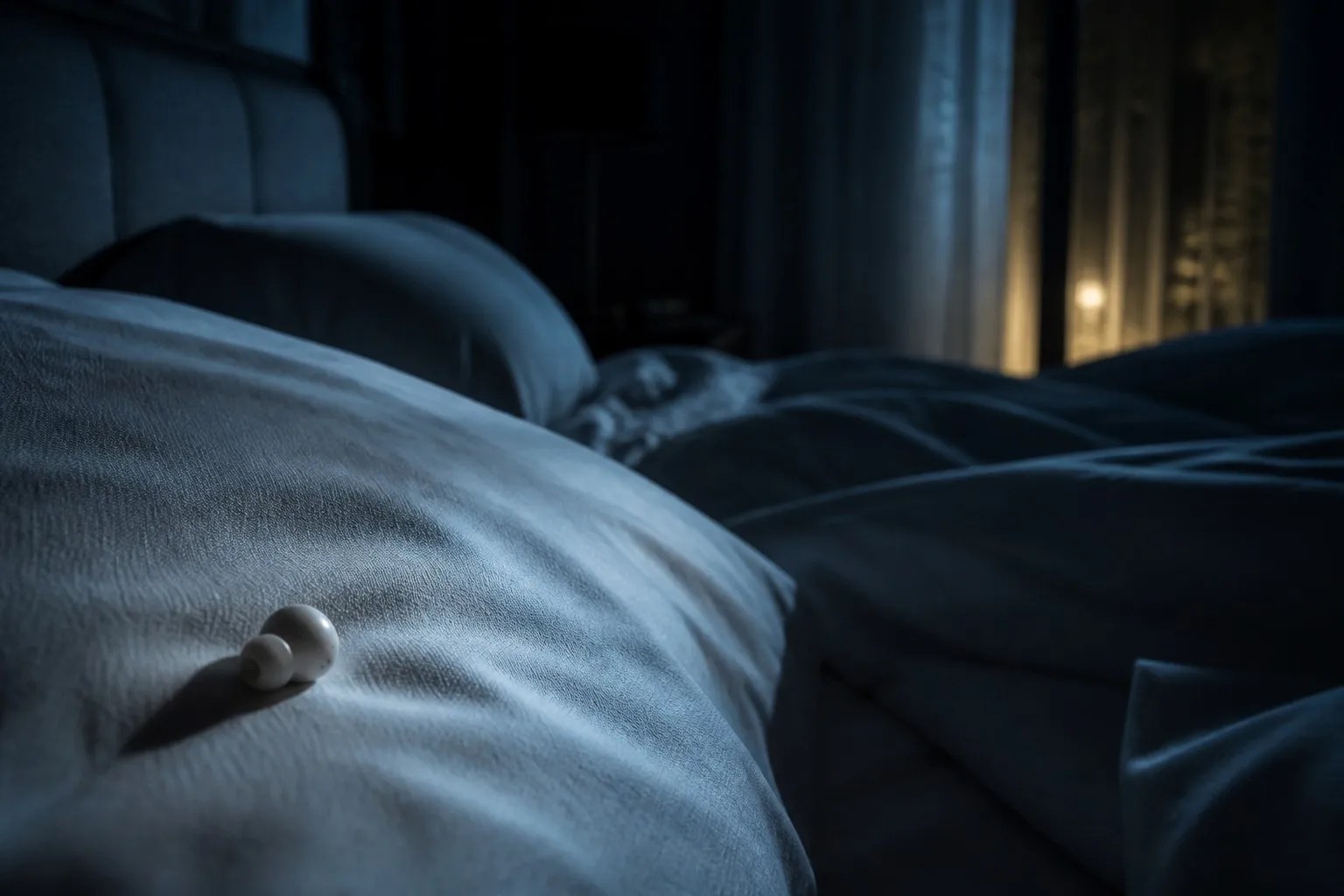
Three in the morning, and the bedroom is a small orchestra of things you cannot control: the partner’s snore rising and falling like weather, the radiator’s knock, the truck braking three streets away, the neighbour’s television leaking through the wall. Somewhere in that inventory, sleep is supposed to happen. The category of audio hardware built for this hour makes a simple and radical offer: put something in your ear canal for the next eight hours, and we will sell you the silence back. Sleep earbuds are not earbuds that happen to be small; they are a different species of device, engineered for a body that is horizontal, immobile and defenceless, and they borrow the ear for the entire night. The price of the transaction is pressure, hygiene and a little of the hearing you were born with, which makes the buying decision less like choosing a gadget and more like choosing a roommate for the one room you cannot leave.
The Feeling First
The Commodity That Cannot Be Stored
Exhaustion has a particular texture when the cause is noise: it is not the tiredness of work but the tiredness of vigilance, the body lying still while the ears stand watch over a soundscape it cannot edit. People describe the feeling as being unable to switch the world off. The sleep earbud is sold against exactly that helplessness, and the emotional product is not audio at all; it is the return of the unguarded night. The person who wakes at three, listens, and does not fall back asleep is not merely tired — they are losing the one asset that cannot be banked, doubled or made up on the weekend.
The honest description of the transaction is a lease. You do not buy silence; you rent it, eight hours at a time, with the ear canal as collateral. The device sits against skin that is warm, damp and unwashed for the duration of the night, in a canal that was not designed to hold a foreign object in repose. That is the tension at the centre of the category, and it is why the purchase deserves more deliberation than the marketing suggests: the same night that delivers the relief also delivers the pressure, the occlusion, the morning wax and the question of whether the alarm will actually be heard. The product is a trade, and the fine print is written on the body.
The Market
A Category That Does Its Work Asleep
The market has quietly split into two philosophies, and the hands-on testing record draws the line clearly. CNN Underscored’s hands-on comparison of 12 August 2026 named the Soundcore Sleep A30 its top overall choice, the Ozlo Sleepbuds 2 its splurge pick, and Loop Dream the passive option — a three-way split that maps the whole category: active noise masking, premium everything, and the simplest possible physical barrier. This is not the translation-earbud market and not the hearing-aid market; those categories solve different problems and are covered elsewhere. Sleep audio is defined by a single job: keeping the world out of the ear while the body is defenceless.
The price ladder is steep and the features climb with it. Mashable’s tested roundup of 6 August 2026 lists the Ozlo Sleepbuds at $349.99 and the Soundcore Sleep A30 Special at $199.99, and its reporting carries expert cautions about hygiene, noise exposure and ear pain that the brochures omit. In the United Kingdom, The Independent’s comparison of 10 June 2026 lists the A30’s ANC runtime at 6.5 hours and Ozlo at ten hours — listing figures from a UK retailer comparison, not independent lab measurements, and a reminder that runtime claims travel badly across markets and firmware versions.
The Pain
Eight Hours of Pressure, and the Alarm You Might Not Hear
The pain this category answers is a list of noises. The snoring partner. The city’s night traffic. The neighbour’s television. The upstairs footsteps. But the pain the category creates is a second list, and it is the one the buyer should read before the first.
1. Sleep position decides everything. A side sleeper presses the ear into the pillow for hours, and a hard-shell earbud becomes a rock under the head. The category’s design compromises — small size, soft tips, flush profiles — exist because of this single constraint, and buyers who sleep on their side have the narrowest field of safe choices. CNN Underscored’s hands-on testing treats comfort by position as the primary filter, and that ordering is correct.
2. The battery must outlast the night, and it often does not. Wirecutter, updated 23 February 2026, records the earlier A20 at 14 hours of playback and the A30 at nine hours with its active noise cancellation and snore-masking added — a higher price for a shorter night. The UK listing puts the A30’s ANC runtime at 6.5 hours, per The Independent. A battery that dies at 3:40 a.m. does not merely stop the masking; it wakes the wearer, which is the one outcome the product exists to prevent.
3. Hygiene is a nightly duty, not an afterthought. The ear canal is warm, dark and damp for eight hours. Mashable’s reporting carries expert cautions about hygiene and noise exposure, and the practical translation is blunt: tips must be cleaned after use, or the device becomes a culture medium worn against the eardrum’s doorstep.
4. The alarm is a platform lottery. Wirecutter notes that alarm behaviour differs by phone platform: whether the morning alarm plays through the earbuds, through the phone speaker, or through both depends on the operating system and the app, and the difference is discovered at 6:10 a.m., not in the spec sheet. A sleep earbud that mutes the alarm it was supposed to carry is a betrayal the marketing never mentions.
The Numbers
The Arithmetic of the Night
The usable numbers in this category are the ones that describe a single night. Wirecutter’s figures give the A20 14 hours of playback and the A30 nine hours with ANC and snore masking engaged, at a higher price — the A30 trading an hour of battery for every feature it adds, and the A20 trading features for a battery that survives the night with room to spare. The Independent’s UK listing shows how much runtime claims shift by market: 6.5 hours of ANC runtime for the A30 against ten hours for Ozlo, as listed. These are listing figures, not lab results, and the spread between them is the honest warning: runtime is the most fragile spec in the category, and it is the one that decides whether the device works at all.
The price arithmetic is simpler. Mashable lists the Ozlo Sleepbuds at $349.99 and the Soundcore Sleep A30 Special at $199.99, and CNN Underscored’s picks run the same ladder: an active-masking flagship, a premium flagship, and a passive option that spends nothing on electronics. The passive option is the category’s best-kept secret — a shaped earplug that costs a fraction of the flagship, delivers most of the isolation for a sleeper whose noise problem is steady rather than piercing, and has no battery to die at 3:40 in the morning. The night does not care how much the device cost; it only cares whether the device is still working when the noise arrives.
The Checklist
Six Questions Before You Hand Over the Night
01
Sleep position
Side sleepers press the ear into the pillow for hours. Comfort by position is the primary filter in CNN Underscored’s hands-on testing; start there, not with the feature list.
02
Passive isolation first
A well-sealed passive tip blocks steady noise without any electronics. Volume should be the last resort, not the first, per the audiology cautions in Mashable’s reporting.
03
Battery versus the night
Wirecutter records 14 hours on the A20 and nine on the A30 with ANC; a UK listing shows 6.5. The battery must cover the whole night with margin, or the device wakes you.
04
Tip hygiene
The canal is warm and damp for eight hours. Clean tips after every use; a dirty tip turns the device into something worn against the eardrum’s doorstep.
05
Alarm behaviour
Wirecutter notes alarms behave differently by phone platform. Confirm on your own phone, at your own volume, before trusting the device with a work morning.
06
Pain means stop
Pressure, soreness or itch in the canal is the device’s own signal. Pain means stop, and no masking sound is worth an inflamed ear.
“Silence is not a feature. It is a lease, signed with the ear canal, renewable every night.”
The Buy
Buy for the Position, the Noise and the Whole Night
The purchase rules are the failure modes in reverse. Work through them in order, and let the night — not the demo video — make the final decision.
1. Choose by sleep position and noise type. CNN Underscored’s hands-on testing treats comfort by position as the primary filter, and the noise type decides the technology: steady hums yield to passive isolation, while a snoring partner’s unpredictable bursts may need active masking. Match the mechanism to the sound, not to the price tier.
2. Exhaust passive isolation before raising volume. A properly seated passive tip blocks more noise than a poorly seated active one, at zero battery cost and zero added exposure. Mashable’s expert cautions about noise exposure make the order explicit: seal first, amplify never if you can avoid it.
3. The battery must cover the night, and then some. Wirecutter’s figures — 14 hours on the A20, nine on the A30 with its features engaged, and a UK listing at 6.5 for the A30’s ANC runtime per The Independent — are the arithmetic of the night. An eight-hour sleeper needs margin, because runtime claims are the most fragile spec in the category.
4. Clean the tips after every use. Hygiene is the maintenance contract of this category, and it is non-negotiable. Warm, damp, eight hours — the conditions are ideal for everything the ear does not want more of. Cleaning is not a chore; it is the warranty.
5. Confirm the alarm on your own phone. Alarm behaviour differs by phone platform, and the discovery belongs in the store, not at 6:10 a.m. on a Monday. Set the alarm, put the earbuds in, and confirm the sound reaches you before the first real test.
The Fine Print
What Masking Cannot Mask
1. Noise masking treats neither sleep apnea nor the cause of snoring. A masking sound can cover a snoring partner’s noise; it cannot treat the snorer, and it cannot treat the listener’s apnea. Mashable’s reporting is explicit that snoring can be a clinical signal worth investigating. The device is a soundscape, not a diagnosis, and anyone using it to manage a partner’s loud nights should consider what the loud nights are announcing.
2. Prolonged volume and missed alarms are documented cautions. The Heuser Hearing Institute, an audiology clinic, cautions about prolonged volume, missed alarms and cords. Prolonged exposure at high volume is a hearing-risk behaviour, and masking sounds played all night are prolonged exposure by definition. Keep the level as low as the noise allows, and never use a corded device in bed, where the cord can wrap around the sleeper.
3. Pain means stop. Ear pain, soreness or itch that persists past the first nights is the device’s verdict on your anatomy. Expert cautions in Mashable’s testing include ear pain directly. No masking feature is worth an inflamed canal, and no return policy compensates a night’s sleep.
4. These are not hearing aids, and runtime figures are listings, not lab results. Sleep earbuds are consumer audio, not medical devices, and they should not be expected to do audiological work. The 6.5-hour and ten-hour figures are UK listing values reported by The Independent, and Wirecutter’s 14-hour and nine-hour figures come from its own testing; its review is an affiliate testing source. Treat every runtime as a claim to verify against your own night.
5. The snore that wakes you may be the message. Loud, persistent snoring in a partner, or your own, is one of the classic signals of obstructive sleep apnea, and the clinician’s caution belongs in this article because the product’s purpose is to make the noise bearable. Mashable’s experts say it plainly: the snoring itself is worth investigating. Masking is a comfort; diagnosis is a conversation with a physician.
The Last Word
The sleep earbud is a small, honest transaction in a category that prefers to sound like magic: you lend the device your ear for the night, and it lends you a quieter world. The terms are worth reading. Position decides comfort, battery decides whether the device survives the night, hygiene decides whether the ear survives the device, and the alarm decides whether the morning survives the arrangement. The limits are just as plain. Masking sound is a comfort, not a cure, and a partner’s snore can be a message rather than merely a noise. Buy for the position, the noise and the whole night; clean the tips; keep the volume low; and if the ear hurts, stop. The silence is real. The lease is yours to renew.
— THE SMARTS DESK
Sources
Research Appendix
Every statistic in this article links to its primary source. Full list, as of 31 August 2026:
| Data point | Institution | Date | Source |
|---|---|---|---|
| Hands-on comparison: Soundcore Sleep A30 top overall, Ozlo Sleepbuds 2 splurge, Loop Dream passive option | CNN Underscored | 12 Aug 2026 | Hands-on comparison |
| A20 14-hour playback; A30 adds ANC/snore masking at nine-hour battery and higher price; alarms behave differently by phone platform (affiliate testing source) | NYT Wirecutter | Updated 23 Feb 2026 | Sleep headphones review |
| Ozlo $349.99; Soundcore A30 Special $199.99; expert cautions on hygiene, noise exposure, ear pain and snoring as possible sleep-apnea signal | Mashable | 6 Aug 2026 | Tested roundup |
| UK comparison: A30 ANC runtime 6.5 hours in its listing; Ozlo ten hours (listing figures) | The Independent | 10 Jun 2026 | UK comparison |
| Audiology-clinic cautions on prolonged volume, missed alarms and cords (undated clinic source) | Heuser Hearing Institute | Accessed 31 Aug 2026 | Clinic guidance |
 Independent Intelligence on Ambient Technology
Leave a comment